




The selection process itself is where most businesses go wrong — focusing on the wrong criteria and falling victim to vendors who prioritize billing over your success.
Buyers get lost in feature comparison spreadsheets and miss the real question: which platform will actually drive measurable business results for your team's specific workflows?
Recognizable brand names dominate CRM marketing budgets — not CRM success rates. A big name with poor implementation support and low adoption rates will fail regardless of reputation.
Hidden implementation fees, custom development requirements, and slow go-live timelines can double or triple the true cost of a CRM — long before a single deal is closed in the system.
The most powerful CRM on the market delivers zero value if employees won't use it. Unintuitive interfaces and poor onboarding are the leading causes of CRM project failure.
The CRM market is cluttered with vendors whose sole priority is getting clients to pay more — regardless of outcomes. Vague pricing, lock-in contracts, and surprise professional services fees are common traps.
A CRM purchased for today's needs that cannot integrate with new tools, adapt to new workflows, or scale to enterprise deployment forces costly re-platforming down the road.
A smarter cloud CRM purchase starts with evaluating the four criteria that actually determine success — before price or features ever enter the conversation.
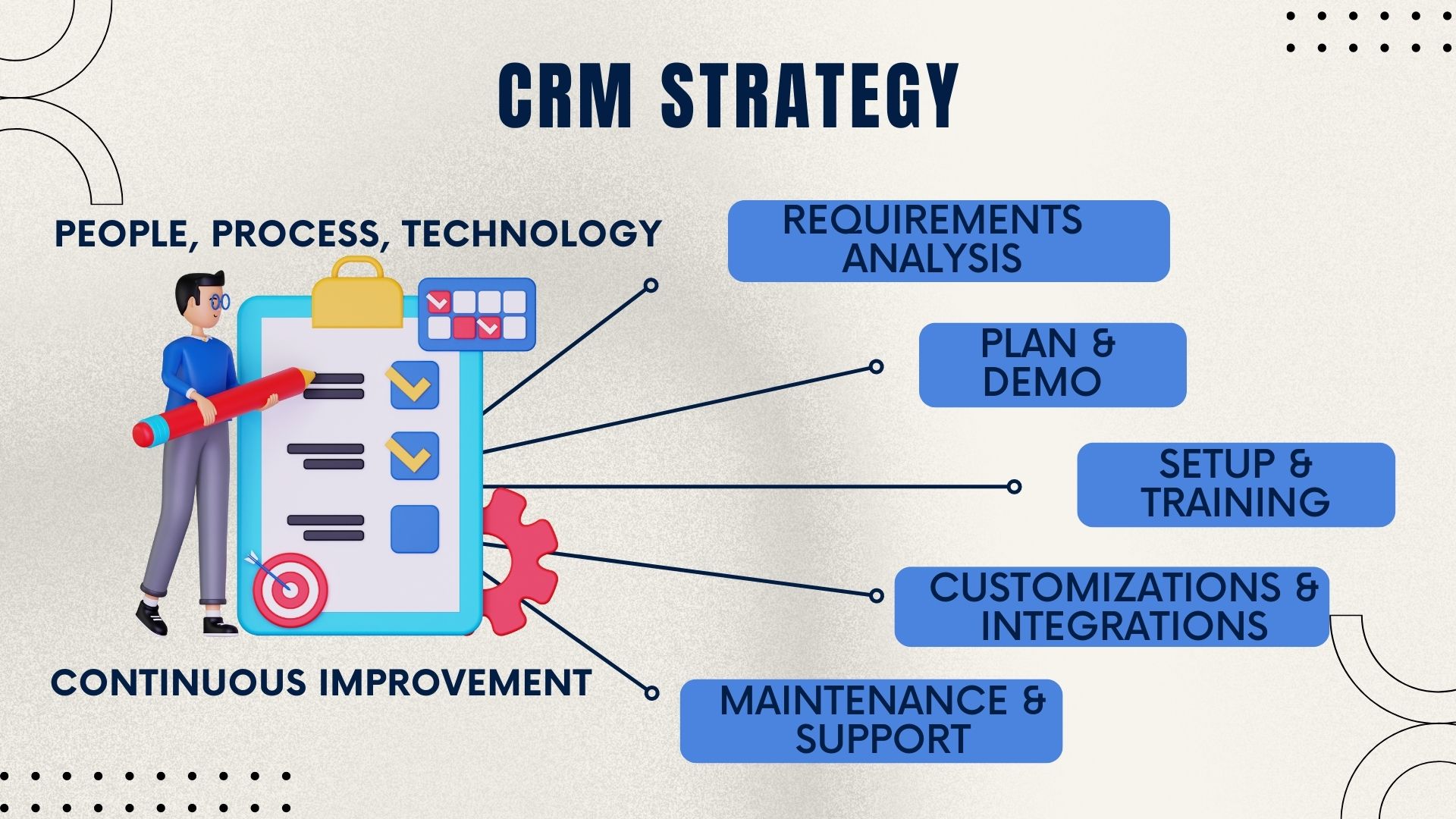
A properly selected and adopted cloud CRM system delivers measurable, company-wide benefits that justify the investment many times over.
With 22+ years of cloud CRM innovation, Salesboom is built around the four pillars that matter most to buyers: fast deployment, deep flexibility, high adoption, and minimal IT burden.
Pre-built templates, guided onboarding, and point-and-click configuration get your team live and productive faster than any competitor — without expensive consultants or months of custom development.
Connect Salesboom to Outlook, QuickBooks, and hundreds of business tools via web services API — future-proofing your CRM investment as your tech stack evolves and business needs change.
Intuitive interfaces, mobile-responsive design, and role-based dashboards drive the kind of user adoption that turns CRM from a line item into a genuine competitive advantage for your entire organization.
Fully cloud-hosted with automatic updates, managed security, and self-service administration — your IT team can focus on strategic work, not CRM maintenance, patching, or backup management.
Predictable monthly pricing starting at $14/user with no hidden fees, no vendor lock-in, and no surprise professional services invoices — exactly the transparency buyers deserve from day one.
3,500+ businesses across 159 countries trust Salesboom to power their operations — from growing startups to established enterprises — with the stability and reliability your cloud CRM investment demands.
The cloud CRM market is filled with vendors who excel at selling but underdeliver on value. Protect your organization by watching for these warning signs during evaluation.
Vendors who hide pricing behind "contact us" are typically hiding fees. Demand transparent per-user rates and a complete cost breakdown before evaluating further.
Multi-year contracts with exit penalties are a red flag. Confident CRM providers offer flexible terms because they know their platform earns renewal — not contracts that force it.
Demo environments often look perfect but fail to reflect your actual workflows. Insist on a real sandbox trial with your own data before making any purchasing commitment.
Promises of "unlimited customization" that require costly professional services engagements inflate your total investment and create ongoing dependency on the vendor's billable consultants.
Slow or scripted support during the sales process is a preview of post-sale service quality. The way a vendor treats prospects is exactly how they will treat customers.
Vendors with unclear data ownership terms create long-term risk. Your customer data is your asset — ensure the contract explicitly confirms you can export everything, anytime, without penalty.
Answers to the most common questions from business buyers actively evaluating and shortlisting cloud CRM solutions.
Go deeper on the criteria, costs, and implementation process before making your cloud CRM purchasing decision.
Before purchasing any cloud CRM software, understand what sets Salesboom apart after 22+ years of innovation. Discover why Salesboom is the buyer-centric choice for businesses that want fast deployment, transparent pricing, and real CRM success.

Step-by-step guidance through the full cloud CRM purchasing process — from requirements gathering to contract signing. Follow our how-to-buy guide and avoid the common mistakes that turn CRM investments into expensive disappointments.

Weighing a custom build against purchasing a proven cloud CRM platform? Our detailed build vs. buy analysis breaks down the true total costs, hidden risks, and realistic timelines of both approaches so you can make a confident decision.

Not sure which cloud CRM features your business actually needs? Our expert consultants map your requirements before you purchase. Explore CRM consulting services and get a vendor-neutral evaluation from specialists who prioritize your outcomes.

Worried about a slow, expensive go-live? Salesboom's accelerated deployment program gets you live and generating ROI faster than any standard implementation. Learn about FastTrack and see how quickly your team can be running on cloud CRM software.

User adoption is the #1 predictor of CRM success — and training is how you achieve it. View our CRM training programs including role-based onboarding, live sessions, and on-demand courses designed to drive adoption from day one across every department.

The best cloud CRM purchase is one configured for your specific industry. Salesboom offers vertical-specific templates and workflows out of the box. See how we know your business and discover industry-tailored CRM solutions ready to deploy on day one.

A structured, risk-managed deployment framework is what separates a successful CRM launch from a costly overrun. Explore our implementation methodology and understand the proven process that has delivered 3,500+ successful cloud CRM deployments worldwide.

Before purchasing, understand exactly what capabilities are included at every pricing tier. Browse all CRM features and see how Salesboom's unified cloud platform covers sales automation, marketing campaigns, customer service, and analytics in a single subscription.
Start your free trial today and experience how Salesboom's cloud CRM system combines fast implementation, powerful flexibility, and effortless usability. No credit card required — just real results.
Questions? Call: 1-855-229-2043
Discover powerful CRM editions to scale your business efficiently.
A complete CRM suite with Marketing Automation, ERP integration, and Support tools — built for performance and value.
Explore ProfessionalFor large enterprises — automate workflows, unify data, and leverage analytics to drive strategic growth.
View EnterprisePerfect for small teams starting with CRM — manage leads, track sales, and boost productivity with simplicity.
Discover Team